Why Summer is the Best Time to Train in TaeKwonDo

Unlock Confidence, Discipline, and Skill Through Summer TaeKwonDo Classes

As the school year winds down and summer begins, many families shift their focus to vacations, camps, and a much-needed break from routine. But at Virginia TaeKwonDo Academy, we believe that summer TaeKwonDo classes are one of the best times for students to grow mentally and physically through martial arts.

Here’s why summer is the perfect time to train:


1. More Time, Less Stress

During the school year, kids are often overwhelmed with homework, extracurriculars, and social commitments. Summer offers a break from that pressure — giving students more time and mental space to focus.

As a result, students can progress faster and retain techniques more effectively during the summer months.


2. Build Strength, Focus, and Confidence

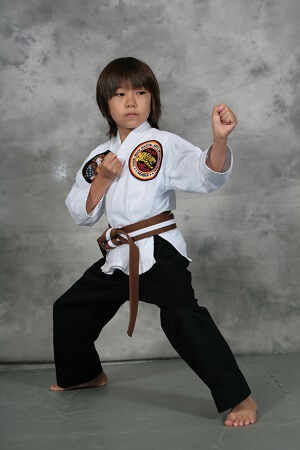
TaeKwonDo isn’t just physical — it also trains the mind. With consistent summer practice, students develop key life skills such as discipline, confidence, and goal-setting.

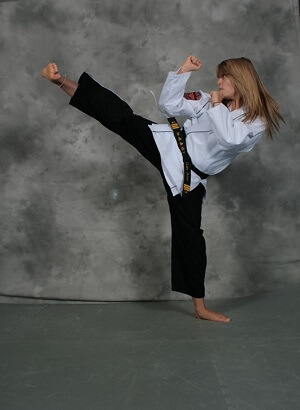
In addition, students improve not just in kicks and forms, but in how they carry themselves in school, sports, and life. That’s why summer classes are a smart investment.


3. Avoid the Summer Slide

Just as students can fall behind academically over the summer, they can also lose martial arts momentum.

However, staying active in TaeKwonDo during summer break helps students maintain their physical strength and mental sharpness — so they return to school in the fall feeling strong and confident.


4. Set and Achieve Summer Goals

Summer is the ideal time to pursue rank advancement or new skills. Without weekday school distractions, students can focus on mastering forms, improving flexibility, or preparing for their next belt test.

Even setting a small summer goal — like breaking a board or leading warm-ups — builds purpose and motivation.


5. Make New Friends and Memories

Finally, summer TaeKwonDo classes are filled with energy, excitement, and friendship. Students bond with training partners, attend special events, and celebrate achievements together.

These summer memories often become some of the most meaningful in a child’s martial arts journey.


Ready to Train This Summer?

Whether you’re brand new or already on your martial arts path, Virginia TaeKwonDo Academy offers a welcoming space to grow all summer long.

✅ More time
✅ Less stress
✅ Stronger mind and body

📞 Call us at (757) 558-9869 or Contact Us to get started!


Virginia TaeKwonDo Academy — Building Leaders One Belt at a Time.

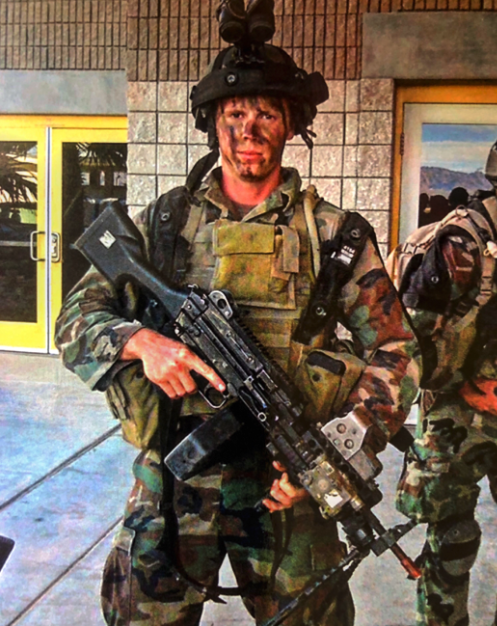
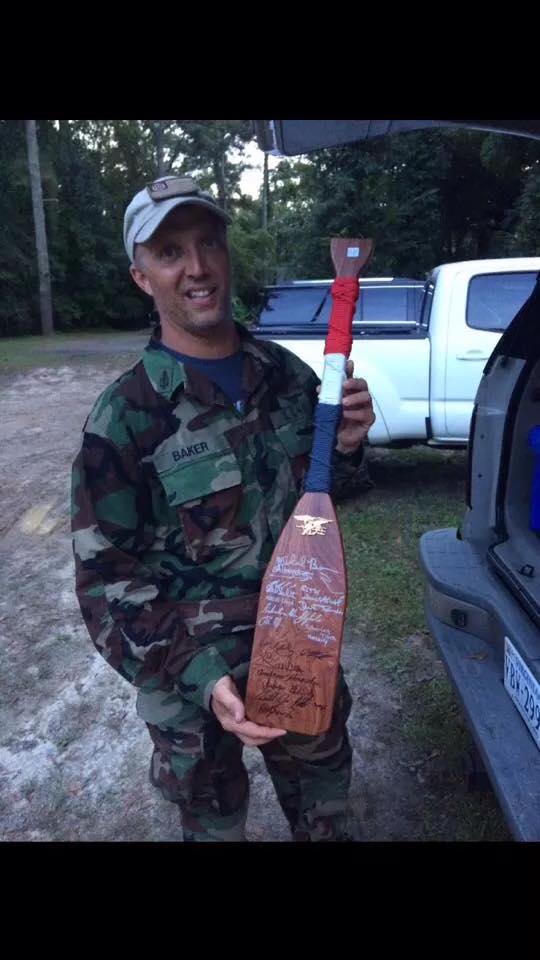
How Navy SEALs Manage Stress: 3 Lessons You Can Use Today

Talk with Chadd Wright, a former Navy SEAL, and he will tell you the following.

We are talking about how I manage and have managed in the past stress anxiety and worry in my life.  What would you do if I tied your hands behind your back and tied your feet together and dropped you in the deep end of a swimming pool?  I’ve lived a pretty stressful life.  I’ve done some pretty crazy stuff and I have had to implement and figure out some super important tools in order to be able to stay engaged and in some cases stay alive.  I want to give you guys three tools they taught us in a course called pre-buds in order to prepare us to manage the stress that we were about to encounter.   When we got to BUDs (Basic Underwater Demolition/SEALs) I have continued to use these three things in my life.  probably it’s safe to say on a daily basis to help me get through whatever challenges I’m being faced with in the day.  Three really simple things I thought they were freaking corny at first until we started doing things like drown proofing and 50 meter underwater swim and all the crazy evolutions that we did in BUDs and these three things actually are what allowed me to get through them and stay calm and actually perform the way I needed to perform. 

   The first one is POSITIVE SELF-TALK.  So we actually went to a classroom every day in pre-BUDs and we practiced these things we learned.  What positive self-talk means is that we are aware of the conversation that’s going on in our head especially during moments of chaos especially during moments that are stressful especially during doing things that are causing anxiety we have to be constantly aware of that conversation that’s going on in our head.  We have to control that conversation the first part of controlling it is being aware of it.  When we see or recognize our thoughts starting to drift to a place where they don’t need to be, going in the midst of this chaotic situation, we got to reel that back in right the way.  I personally reel that back in by counter punching it with a positive affirmation or positive spoken word.  All right I’m going to tell myself the truth about the situation and whether that saying something like, I’m experiencing stress or my self-talk starts to tell me that maybe I’m not good enough to do this or maybe I’m not capable of doing this.  I will simply tell myself, no man you are trained you are prepared you are capable.  It just redirects that self-talk in my head.  I think another big way to manage our self-talk is to get ahead of it by being hyper aware of the input and what we are allowing to come into our minds each and every day.  I challenge you guys to do what I do almost on a daily basis and that is to audit what I am listening to and who I’m listening to and what forms of media I’m watching to make sure that those things are sources that are going to promote good self-talk that are going to promote the right conversations in my head when I’m experiencing a stressful situation.

    The second tool that we learned in pre-BUDs that really helped me especially again when we started doing highly stressful activities and evolutions was VISUALIZATION.  Like all these tools I thought it was really freaking corny at first and I was like how is this actually going to work?  When I realized visualization really did work was during our 50 meter underwater swim.  That evolution was causing me a lot of stress and anxiety especially when I was sitting there on the pool deck waiting for my turn to go and do this 50 meter underwater swim and they were pulling my classmates out of the water and reviving them right there on the pool deck because they were essentially drowning themselves.  So I sat there on the pool deck I worked through this visualization process.  The way I did it is I closed my eyes and I pictured in my head the perfect outcome on this evolution.  I pictured myself completing this 50 meter underwater swim without drowning and I pictured it in very great detail.  I tried to incorporate as much into visualization as I possibly could so for the 50 meter underwater swim I’m literally trying to feel the water as it flows across the surface of my skin I’m feeling and actually engaging the muscles in my lats and cupping my hands as I pull through the water effectively and efficiently.  I actually thought about and could feel myself getting a little short on air and what that’s going to feel like and how I can control the  anxiety.  That’s creating and I visualized this process on the pool deck and when I got in and did my 50 meter underwater swim perfectly.  I didn’t think I was going to be able to do it so I gained a lot of confidence in the power of this visualization technique right there that day and I’ve continued to use it throughout the rest of my life.  The key is to practice it and to incorporate as much detail as you possibly can.  If you don’t quite know what the challenge is going to look like just visualize what you want it to look like so you should visualize your perfect scenario and as far as your performance in whatever the challenge is that you’re facing. 

    The last one that we are going to talk about is a BREATHING TECHNIQUE.  Your breath essentially helps you stay present.  Your breath is a tremendous tool that you can use to bring you back and be present it also helps you physiologically.   In pre-BUDs we learned a breathing technique called 4x4x4 breathing.  It’s a four count in breath, a four count hold, and a four count exhale.  Four count hold you do that for about four or five rounds it forces you to focus on your breath again which brings you back to present.  Your breath forces you to focus on something other than what’s about to happen or the challenge you’re about to face.  Another thing it’s going to do it’s going to slow your heart rate down it’s going to relax you so physiologically there are some benefits of getting control of your breath too.  It’s going to allow you to recover and ultimately all those things combined it’s going to keep you from panicking.  If we let that worry anxiety and stress overcome us that’s what it leads to is panic. 

These are the three major techniques that I use that I learned in SEAL training that I use to make it through my career in the SEAL teams and that I use now today to mitigate stress anxiety and worry especially in the midst of a challenging or a chaotic situation.

Child Self-Defense Drill for Parents | Emergency Preparedness for Families

How to Practice the Self Defense Drill at Home

Emergencies don’t wait for perfect timing. Whether it’s a fire, a break-in, or a dangerous situation at school or in public, the actions you take in the first few seconds matter most. That’s why every parent should run a child self-defense drill—a practice scenario that gives your family the muscle memory and mindset to respond quickly and correctly.

We’ve all heard of fire drills in schools, but very few families run emergency drills at home. When something goes wrong, panic takes over. People freeze. But with the right preparation, your child can be trained to respond automatically and calmly.

Just like seat belts or smoke detectors, a child self-defense drill is about preparation—not fear. These drills teach kids what to do, where to go, and how to respond in a way that keeps them safe until help arrives.

How to Run a Child Self-Defense Drill at Home

1. Choose a scenario:

  • A loud crash in the house
  • Someone trying to open a locked door
  • A scream from another room
  • A stranger approaching while walking home

2. Tell your child it’s a drill (at first):

Then let them act. Ask:

  • What’s your first move?
  • Where do you go?
  • Do you yell? Run? Lock a door?
  • How do you alert someone for help?

3. Practice regularly:

Run drills monthly, just like a fire drill. Let your child think critically and then review together afterward. Praise what they did well and adjust anything that needs improvement.

Each practice session builds confidence, awareness, and decision-making under stress.

A Lesson from the Navy: Train Like It’s Real

When I went through Navy Search and Rescue School, we learned this lesson the hard way. One part of training required treading water for extended periods, away from the edge of the pool.

One of my classmates, a Petty Officer Third Class, began to doubt himself. “I don’t think I can do this,” he said out loud. Seconds later, an instructor in the water came up from behind and dragged him under.

This wasn’t punishment—it was a simulation. In real rescues, panicked survivors often grab rescuers from behind. We had to be ready. The Petty Officer blacked out and had to be rescued by the instructor. It was a sobering lesson:

You don’t rise to the occasion in a crisis—you fall to the level of your training.

That’s true for adults. It’s true for kids. Training prepares you to survive the moment.

How TaeKwonDo Training Helps

At Virginia TaeKwonDo Academy, we go beyond martial arts kicks and punches. We build mental discipline, emotional control, and practical self-defense skills. Our students—kids, teens, and adults—learn to respond to pressure with clarity and confidence.

A child self-defense drill is only the beginning. TaeKwonDo training helps children:

  • Recognize danger
  • React quickly and appropriately
  • Stay calm under stress
  • Develop a strong, respectful mindset

Get Started Today

We offer classes for all ages and skill levels. Whether your child is shy, energetic, or needs to build confidence, our structured environment helps them thrive.

Navy SEAL Life Lessons | Discipline, Grit & Leadership

Why Navy SEAL Lessons Apply to Everyday Life

While going through a course I learned 5 messages that changed me, and they can change you as well.  If you don’t know what a Navy SEAL is, he is an elite special operator of the United States Navy. 

Lesson 1 – Remember ‘The Only Easy Day Was Yesterday’

Each and every day you should be purposely exposing yourself to difficult, uncomfortable situations – you should be forcing yourself to think outside the box to overcome obstacles. An easy day provides no room for growth, however for the average man is not looking for a fulfilled life and will opt for an easy day. Hungry men like the Navy Seals take the beaten path and endure struggle after struggle on purpose to obtain the strength, grit and skills necessary to perform their job as affectively as possible.

Lesson 2 – Everybody wants to be a SEAL on Friday

“The only easy day was yesterday was our motto. We used to joke; everyone wants to be a SEAL on Friday. It was easy to be a SEAL at the bar or when you’re out with friends relaxing. But being excited about being a SEAL in the middle of winter in Afghanistan, when you know you have a long, crazy, cold night in front of you, is a different story.”

Come the end of the week (the end of training, the success/final product) everybody wants to be able to call themselves an elite Navy SEAL, a millionaire, a successful bodybuilder or what have you – but no one wants to put in the work to reach such an elite level.  If you’re willing to put in the work and grind relentlessly towards your desired end state there is no reason why you cannot achieve it.

Here’s an example of an ad placed in a London newspaper by Ernest Shackleton in the early 1900s:

“Men wanted for hazardous journey. Low wages, bitter cold, long hours of complete darkness. Safe return doubtful. Honor and recognition in event of success.”

Lesson 3 – Stay in your 3-Foot World

We need to focus on what we can directly control – forget about the weather, what others are doing and anything else you cannot directly control. Spend your time focusing and working on what you can control right now, within your 3-foot world.

Mark shares a great story within the book when he’s rock climbing in Las Vegas – his instructors tell him to focus on what is immediately in front of him in order to get through the brutal climb – don’t look up or down, don’t look over to the other guys climbing, they can’t help you.

Focus on your 3-foot world, what is directly in front of you in order to prevail successful.

Here’s the excerpt from the book I’m talking about:

“Hey, man,” the trainer said in a lazy, raspy voice. “Just stay in your three-foot world.” I was a couple of hundred feet up the rock face and I could barely think, let alone decipher his cryptic advice. “What the hell are you talking about, bro?” “Only focus on your three-foot world,” he said.” Focus on what you can affect. You keep looking around, and none of that can help you right now, can it?” I shook my head no. “You’re calculating how far you’re going to fall,” the instructor said. “You’re looking down at Jeff, but he’s not going to come up and help. You’re looking out at the Strip. What are you going to do, gamble your way to the top? Don’t look at me. I’m not going to help you either. This is up to you. You’re climbing this rock. Stay in your three-foot world.”

Lesson 4 – Communication & Trust Are Everything

A Navy SEAL is told they need to be able to ‘shoot, move and communicate’; these are their most important directives.

Strong communication among your peers, gym buddy, girlfriend and family are vital to build and maintain successful relationships. In the Navy SEALs communication is stressed to the nth degree, one slip up in both trust or communication can be the difference between a successful mission and a failed mission – a failed mission more often than not ensures you’ll be escorted home in a body bag…

“Communicating is all about speaking clearly and effectively so your teammates know what you’re doing”

Lesson 5 – There Is No Secret Sauce

Anything worth having in life is going to require hard work, period. You cannot cheat or trick your way to success.

Want to become a Black Belt? You’ve got to endure the grueling training in order to gain the right to call yourself a Black Belt.

This is fitting for all endeavors in life – building a shredded, muscular physique and launching a successful business are both impossible without long hours, hard work, consistency, grit and determination – anyone who tells you otherwise is likely an internet marketer or snake oil salesmen trying to make a quick buck from human’s natural lazy tendencies. As discouraging as this may sound, I think it’s fantastic – competition out there is slim because so few people are willing to step up and commit themselves to relentlessly pursue their goals – it’s lonely at the top.

  • Hard work beats talent (if it is not further developed through hard work)
  • Hard work beats luck
  • Hard work beats intent
  • Hard work beats dreamers, wishers and thinkers

Why Take Martial Arts? 10 Reasons to Start Today

Top Benefits of Martial Arts Training for Kids and Adults

1. It builds confidence

The benefits of martial arts classes go far beyond kicks and punches. From focus to fitness, here are 10 reasons why it’s a life-changing choice. One of the biggest advantages to taking martial arts classes is the way it makes you feel afterwards. A lot of people are not confident with their ability to protect themselves before they join classes. Martial arts classes will build confidence in yourself and ultimately mold you into a better person.

2. It works on your balance

Let’s face it, some people have difficulty walking and chewing gum at the same time. Our classes require a lot out of your body, including the ability to do two things at once without falling over. Improving your balance also means improving focus. TaeKwonDo classes teach you how to focus on your target while you control your body. Without balance it is almost impossible to fight. Through gaining your body control and balance, you will be better prepared to protect yourself.

Martial Arts Student

3. It helps develop self-discipline

“The only discipline that lasts, is self-discipline.” In order to learn and grow with your martial arts abilities, you have to develop self-discipline. You have to be motivated and dedicated to the practice. In order to be better protected, you have to keep practicing. Actually going to class and showing up on a regular basis develops discipline. Taking these types of classes will get you focused on your personal protection and on your surroundings. Like anything else, you can’t get better if you don’t practice.

4. It helps improve your physical conditioning

The whole point of martial arts classes is to prepare you for any situation that may bring harm to you. Physical conditioning is extremely important when it comes to martial arts. Training and practicing prepares you for the adrenaline dump when a situation arises that may require you to fight. When someone comes after you, you will experience what is called an adrenaline dump. It’s your body’s way of responding to the fight or flight situation. It only lasts a few seconds, so you need to be physically conditioned to appropriately deal with a dangerous situation. If you aren’t, your body will not work as well as you need it to after the adrenaline dump. Physical conditioning will work on your reflexes and your awareness of an attack. When you are fighting it is important to be focused both mentally and physically. If you are prepared, you will be more successful in a dangerous situation and the dump won’t take all your energy from you.

5. It improves your street awareness

Martial arts classes will make you more aware of your surroundings. You’re never planning to be attacked, but your attacker is the one with the plan. Martial arts classes will help you be aware at all times and ready should this type of situation arise. You might be shocked for a second, but you will have the necessary reactions to protect yourself. 90 percent of all encounters can be avoided with situational awareness. So, always be aware of your surroundings.

6. It teaches you self-respect

The practice of martial arts is centered around trust and respect. It teaches respect of each other and respect for yourself. Is this beneficial in life? You bet! If you don’t respect yourself, then how can you respect others? When you are practicing your martial arts moves, sometimes you will be practicing with a partner. There needs to be mutual trust between the two of you to not hurt each other, but still practice with speed and intensity. If you do not respect yourself it is unlikely that others will respect you and have that mutual trust.

Virginia TaeKwonDo student

7. It helps to develop a warrior spirit

We all watch the news and see how terrible it can be. Taking martial arts classes will help you develop a sort of warrior spirit. We all know that if we are attacked, the last thing we want to do is get in that van of our assailant. Martial arts classes can prepare you for battle and, most importantly, survival. If you are attacked, you don’t want to go to a secondary location, and having martial arts on your side will help prevent that from happening. You will have a sense of “I am going to make my stand here, not down the road.”

8. It helps you develop a fighter’s reflex

In a fight, movement is power. You can’t stand around and wait for your attacker’s next strike, you have to move! Martial arts classes will help develop your reflexes, and you will gain a fighter’s reflex. A fighter’s reflex is different from your normal reflexes. In normal situations you respond to something that happens. When you are being attacked it is better to know how to respond. Fighter’s reflex will allow you to move quickly and smartly in the situation. You will know where to step and where to throw your punch. It is preparing your mind and your body to work together for your protection.

9. It will help you with goal setting

Martial arts classes help you set goals. Whether you want to perfect a specific move or work hard to feel like you can protect yourself, you are setting a goal. It gets you back in class each week and will help you in your everyday life. It helps you develop a drive that you may not have had before. If you take your goal setting seriously within your martial arts classes, it can roll over into your everyday life, helping you get through any tough situation that comes your way. Short-term goals can lead to long-term goals like the rungs in a ladder. Small steps get you to the top.

10. It has a positive influence on your life

Unlike a lot of things in life, taking martial arts classes will always have a positive impact on your life. Each and every one of the reasons above are proof of this. Taking martial arts classes can boost your spirits and make you a more confident and better version of yourself. It’s important to have things in life that we can rely on to make us happy – taking these kinds of classes does just that.

Curious about which benefit will mean the most to your family? Book a free trial class and find out firsthand. See our current class schedule or contact us for more information and to sign up!